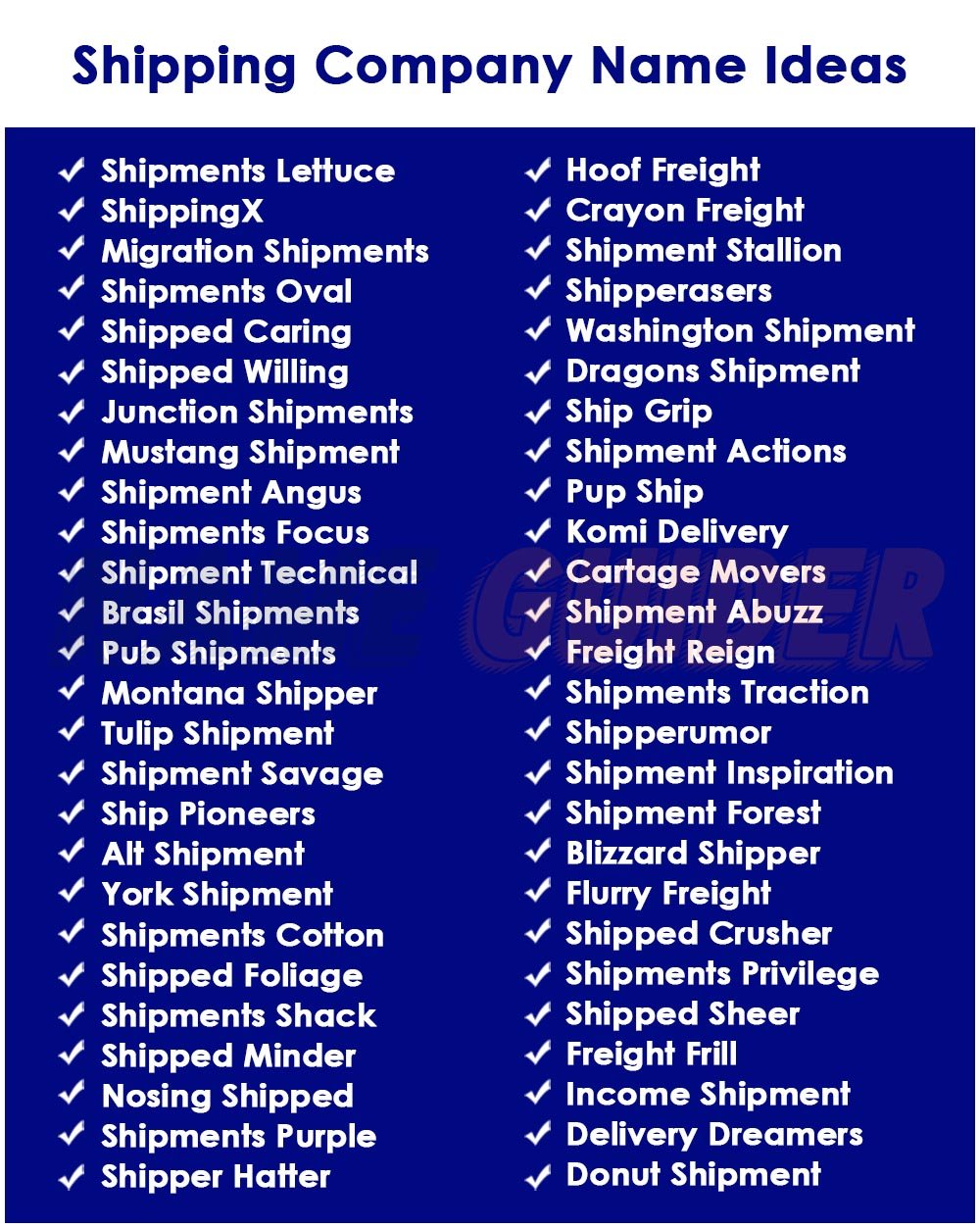
Launching a shipping company means laying the groundwork for global commerce, connecting businesses, and delivering essential goods. But before you can move mountains of cargo, you need a name that moves people—a brand identity that resonates, sticks, and sets you apart. Crafting that perfect name often starts with a robust brainstorming session, leveraging the best Shipping Company Name Ideas & Generators available.
This isn't just about picking a catchy phrase; it's about embedding your vision into the very fabric of your business. Your company's name is its first handshake, its promise, and its enduring legacy. Let’s dive into how you can choose a name that doesn't just deliver packages but delivers impact.
At a Glance: Key Takeaways for Naming Your Shipping Business
- Your Name is Your Brand: It's foundational for attracting customers and building trust.
- Research is Paramount: Always check competitors, domain availability, and trademarks.
- Keep It Snappy: Aim for short, memorable names, ideally one or two syllables.
- Align with Identity: Ensure your name reflects your company's values and personality.
- Think Long-Term: Choose a name that allows for future growth without being too specific.
- Test It Out: Get feedback from your target audience before finalizing.
- Leverage Tools: Use AI generators for inspiration, but always vet options thoroughly.
Why Your Shipping Company Name Isn't Just a Label—It's Your First Impression
The shipping industry is the unsung hero of the global economy. From the smallest local courier to vast international logistics networks, shipping businesses are the arteries that keep trade flowing, shelves stocked, and e-commerce thriving. In such a vital yet competitive landscape, a strong, distinctive company name isn't a luxury; it's a strategic necessity.
Your name is often the very first interaction a potential client has with your brand. It's the headline on your website, the label on your trucks, the word-of-mouth identifier. A well-chosen name instantly communicates professionalism, reliability, speed, or innovation, building trust and attracting the right clientele. Conversely, a weak or generic name can leave you lost in the noise, struggling to build the memorable brand identity crucial for long-term success. Think of the giants: FedEx, Maersk, UPS—their names are synonymous with their services, ingrained in the global consciousness. You want that same immediate recognition, that sense of unwavering capability, from day one.
The Blueprint for a Brilliant Brand Name: Core Principles
So, how do you craft a name that does all this heavy lifting? It starts with a clear set of principles to guide your brainstorming and selection process.
1. Uniqueness & Memorability: Standing Out from the Fleet
In a crowded market, blending in is business suicide. Your name needs to be distinctive, easily recognizable, and stick in people's minds. Before you fall in love with a name, always conduct thorough competitor research. Are there similar names already in use? Does it sound too much like another established player? Avoiding overlap prevents confusion, helps you carve out your own niche, and, critically, steers clear of potential legal issues down the line. A truly unique name helps you build a brand that’s unmistakably yours.
2. Brand Alignment: Reflecting Your Values and Vision
What does your shipping company stand for? Is it speed, precision, sustainability, global reach, or local care? Your name should ideally evoke this personality. If your brand is all about cutting-edge technology and efficiency, a name like "Velocity Logistics" or "SwiftShip AI" might fit. If you're a family-run business emphasizing personal touch, perhaps something like "Harbor Haven Deliveries" or "Reliant Road Freight" would be more appropriate. A name aligned with your mission statement and values creates a cohesive brand story from the outset, making your marketing efforts much more impactful.
3. Brevity & Snappy Appeal: Easy to Say, Easy to Remember
We live in an age of instant information. Short, punchy names are inherently more memorable and easier to recall. Aim for something that rolls off the tongue, ideally no more than two syllables. Think about the most successful brands across industries—Apple, Nike, Tesla, Google. They’re concise and impactful. Long, convoluted names are harder to type, harder to say, and harder to remember, creating unnecessary friction for your customers. Keep it short, make it snappy.
4. Future-Proofing: Room to Grow Without Being Restrictive
It's tempting to create a name that perfectly describes your current service, like "Local Atlanta Bike Courier." But what if, in five years, you expand to national truck freight, or even international air cargo? An overly specific name can quickly become a straitjacket, making your brand seem irrelevant or misleading as you evolve. Choose a name that is broad enough to accommodate future growth and diversification. Focus on a core quality or benefit (e.g., "Reliable," "Swift," "Global") rather than a specific service or geographic location.
5. Testing the Waters: Audience Resonance
You might think you’ve struck gold, but what does your target audience think? Before committing, test your potential names with a diverse group of potential clients, industry peers, and even friends and family. Do they understand it? Is it memorable? Does it evoke the right feelings? Are there any unintended negative connotations? Their fresh perspective can reveal blind spots and help you gauge the resonance and clarity of your choices. This step is invaluable for ensuring your name lands effectively.
Essential Due Diligence: Legal & Digital Gatekeepers
Once you have a shortlist of compelling names, the real work begins: ensuring they’re legally available and digitally viable. Skipping these steps is a common and costly mistake.
Securing Your Digital Footprint: Domain Name Availability
In today's interconnected world, an online presence is non-negotiable for any business, including shipping. Your domain name (your website address) is your digital storefront. Always, always check for domain availability using a reliable domain name search tool. Ideally, you want a .com address that matches your company name exactly. If your preferred .com is taken, consider alternatives like .net, .co, or even industry-specific domains like .delivery or .logistics, but always prioritize the .com if possible.
Beyond just the domain, check for availability on key social media platforms (LinkedIn, Facebook, Instagram, X/Twitter, etc.). Consistent branding across all your digital channels strengthens your presence and makes you easier to find.
Avoiding Legal Headaches: Trademark Verification
Imagine pouring time, money, and passion into building a brand around a name, only to discover later that another company already owns the trademark. The legal battles, rebranding costs, and reputational damage can be devastating. This is why trademark verification is non-negotiable.
Use official government trademark databases (like the USPTO in the United States or national intellectual property offices in other countries) to conduct a thorough search. Look for similar names, spellings, and phonetic matches within your industry. It's often wise to consult with an intellectual property lawyer to ensure your chosen name is truly clear and safe to use, giving you peace of mind and protection for your burgeoning brand.
Unlocking Creativity: Exploring Naming Styles for Shipping Businesses
With the foundational principles and due diligence in mind, let’s explore different creative avenues for generating shipping company name ideas. Each style offers a unique approach to branding, helping you find the perfect fit.
1. Invented Names: The Power of Originality
Invented names are created from scratch, often using creative linguistic techniques like word fusion, alliteration, or completely made-up words. This approach offers maximum originality, allowing you to craft a brand identity that is truly unique and unburdened by existing connotations. While they might require more marketing effort initially to establish their meaning, they provide unparalleled flexibility for growth.
- Examples: FedEx (Federal Express), XPO (originally "eXPO")
- Fictional Ideas: AegisFlow, Zylos Freight, Veridian Logistics, KinetiShip
- Why they work: They're distinctive, often short, and can become synonymous with your brand over time. They are excellent for future-proofing as they don't tie you to a specific service or region.
2. Compound Names: Blending Concepts for Clarity
Compound names combine two words or concepts to create a new, often descriptive, and memorable name. This style is excellent for conveying key aspects of your service or values in a concise way. The two words can be related, or they can represent complementary ideas, leading to intriguing combinations.
- Examples: ShipStation, Loadsmart
- Fictional Ideas: CargoLink, SwiftRoute, PortBridge Logistics, DeliverEase, FreightMate
- Why they work: They offer immediate clarity about your business while still retaining some originality. They are often easy to remember and pronounce.
3. Keyword-Rich Names: Enhancing Meaning and SEO
Keyword names directly incorporate industry-specific terms to enhance meaning and improve search engine visibility. While perhaps less "creative" in the traditional sense, they are incredibly clear about what you do, which can be a huge advantage for certain target audiences. When paired strategically, they can still create a strong brand identity.
- Examples: Global Shipping Inc., Express Freight Solutions
- Fictional Ideas: Precision Logistics Group, Rapid Delivery Solutions, Metro Courier Services, Ocean Freight Partners
- Why they work: They are immediately understandable and can help with initial SEO efforts. They clearly communicate your service offering.
4. Modern & Trendy Names: Sleek and Tech-Inspired
Reflecting contemporary language and branding styles, modern trendy names often lean towards sleek, tech-inspired, or slightly abstract concepts. They might use current vernacular, innovative spelling, or suggest speed, efficiency, and forward-thinking approaches. This style is particularly effective if your shipping company leverages technology, data, or automation heavily.
- Examples: Flexport, Onfleet
- Fictional Ideas: Streamline Delivery, Velocity Express, Nexus Logistics, GridShip, OptiRoute
- Why they work: They appeal to a modern audience, suggest innovation, and often have a clean, minimalist feel, which translates well to digital branding.
5. Niche-Specific Names: Targeting Your Expertise
If your shipping company specializes in a particular niche—be it cold chain logistics, oversized cargo, last-mile delivery, or hazardous materials—a niche-specific name can immediately communicate your expertise. This strategy instantly targets your ideal client and positions you as an authority in that specialized area.
- Examples: Cold Chain Logistics, Heavy Haul Transport
- Fictional Ideas: Perishable Parcel Pros, Bulk Freight Specialists, Pharma Logistics Hub, Fine Art Transporters
- Why they work: They clearly define your unique selling proposition and attract clients specifically looking for your specialized service.
6. Related Concept Names: Evoking Familiarity and Trust
Drawing inspiration from concepts associated with shipping and delivery—like "package," "box," "delivery," "truck," "route," "dock," "harbor," or "journey"—can create names that are familiar, trustworthy, and easily understood. These names leverage existing associations in the customer's mind.
- Examples: Boxed, Roadway Express
- Fictional Ideas: Parcel Peak, Dockside Deliveries, Truck & Trail Logistics, Journey Freight, Harbor Express
- Why they work: They are intuitive, evoke a sense of reliability, and immediately convey the nature of your business without being overly generic.
Leveraging Technology: The Best Shipping Company Name Generators
Brainstorming can be exhausting. Thankfully, technology can be your best friend in generating a wealth of Shipping Company Name Ideas & Generators can jumpstart your creative process and provide a diverse range of options you might not have considered on your own.
AI-Powered Brainstorming: How to Use Them Effectively
AI business name generators are fantastic tools for inspiration. You feed them keywords related to your business (e.g., "fast," "reliable," "global," "freight," "logistics," "delivery") and they’ll spit out hundreds of potential names. Many also check domain availability simultaneously, saving you time.
- How to get the most out of them:
- Start Broad, Then Refine: Begin with general industry terms, then add specific adjectives or unique selling points.
- Experiment with Keywords: Try synonyms, related concepts, and even antonyms to see what surprising combinations emerge.
- Don't Settle: Generate multiple rounds of ideas. The first few might be generic, but deeper into the results, you often find hidden gems.
- Filter and Modify: Use the generated ideas as a springboard. Tweak them, combine parts of different suggestions, or add your own flair.
- Limitations to remember: While powerful, AI generators are just tools for inspiration. They don't check for trademark conflicts or deeply understand brand nuances. You'll still need to perform your own due diligence. To get started and quickly generate a list of possibilities, you might want to explore our name shipping generator.
Beyond Basic: What to Look for in a Good Generator
A good shipping company name generator does more than just combine words. Look for tools that:
- Offer filters by style (e.g., modern, classic, short, catchy).
- Provide immediate domain availability checks.
- Suggest related social media handles.
- Allow you to save and categorize your favorite ideas.
- Give explanations for why certain names might work or what they evoke.
By intelligently using these tools, you can quickly move past common ideas and discover truly unique names. For more advanced features and deeper insights into potential names, our comprehensive shipping name generator can be a valuable asset.
Premium "Brand in a Box" Solutions: When to Consider Pre-Vetted Options
Sometimes, you need to launch fast, or you simply want to minimize the headache of naming and branding. This is where "Brand in a Box" or pre-vetted name services come in. These typically offer:
- Pre-vetted names: Names that have already been checked for
.comdomain availability. - Trademark considerations: Often, basic trademark checks have been performed, though a legal review is still recommended.
- Matching logos/brand assets: Some packages include a basic logo design or branding guidelines.
While more expensive, these solutions can significantly speed up your launch process by providing a ready-to-go brand identity. They are particularly appealing for entrepreneurs who want to focus solely on the operations of their shipping business, knowing the branding is professionally handled. Before making a final choice, it's always good to check various name ideas with our generator to compare against premium options.
Common Pitfalls to Avoid When Naming Your Shipping Venture
Even with the best intentions, it's easy to stumble into common naming traps. Being aware of these can save you a lot of grief.
- Generic or Forgettable Names: "XYZ Logistics" or "ABC Shipping" might be easy to say, but they offer no personality and fade into the background. Aim for something that sparks curiosity or clearly states a unique benefit.
- Hard-to-Spell or Pronounce Names: If customers can't easily say or spell your name, they can't recommend you, find you online, or even remember you. Avoid unusual spellings, silent letters, or complex phonetic structures.
- Overly Restrictive Names: As discussed, names that are too geographically specific ("Downtown Delivery") or service-specific ("Furniture Movers Inc.") can limit your future expansion.
- Ignoring Domain and Trademark Checks: This is perhaps the biggest pitfall. A fantastic name is worthless (or even damaging) if you can't secure its digital presence or if it infringes on someone else's intellectual property.
- Names with Unintended Meanings: Be mindful of how your name might sound in other languages, or if it has any negative slang connotations. A quick cross-cultural check can prevent embarrassing mistakes.
Putting It All Together: A Step-by-Step Naming Process
Let's distill this into a clear, actionable process for finding your shipping company's perfect name.
1. Define Your Brand Core
Before you brainstorm, get crystal clear on your company's identity:
- Mission & Vision: What problem do you solve? What impact do you want to make?
- Values: What principles guide your business (e.g., speed, reliability, sustainability, innovation)?
- Target Audience: Who are your ideal clients? What resonates with them?
- Unique Selling Proposition (USP): What makes you different or better than competitors?
2. Brainstorm Broadly
Now, with your brand core established, cast a wide net:
- Keywords: List every word associated with shipping, logistics, speed, reliability, your niche, and your values.
- Naming Styles: Experiment with each style discussed above (invented, compound, keyword, modern, niche-specific, related concepts).
- Generators: Use AI tools and our shipping company name generator to produce a large initial list. Don't filter at this stage; just collect ideas.
3. Filter & Refine
Begin culling your long list using the core principles:
- Short & Memorable: Eliminate long, complex, or forgettable names.
- Brand Alignment: Discard names that don't fit your company's personality or values.
- Future-Proofing: Remove names that are too restrictive for potential growth.
- Initial Gut Check: Which names simply feel right? Which ones are you excited about?
4. Check Availability
This is where your shortlist becomes even shorter:
- Domain Name: Check
.comavailability first, then other relevant extensions. Secure your chosen domain immediately. - Social Media Handles: Verify consistency across platforms.
- Trademark Search: Conduct thorough searches using national databases. Consult a lawyer for a professional opinion.
5. Test & Decide
With a legally and digitally viable shortlist, it's time for the final push:
- Audience Testing: Present your top 3-5 names to your target audience. Ask for their impressions, recall, and how they perceive the brand based on the name.
- Say It Out Loud: How does it sound when spoken? Does it roll off the tongue?
- Visualize It: How would it look on a logo, truck, or website?
- Make the Call: Weigh all the feedback and your own instincts. Choose the name that best represents your vision and has the strongest potential for brand building.
Frequently Asked Questions About Shipping Company Names
How long should a shipping company name be?
Ideally, your shipping company name should be short and punchy, generally no more than two syllables. This makes it easier to remember, pronounce, and type, improving recall and brand recognition.
Should my name be descriptive or abstract?
Both approaches have merit. Descriptive names (e.g., "Global Express Logistics") offer immediate clarity and can help with SEO. Abstract or invented names (e.g., "XPO," "AeroFlow") provide maximum originality and flexibility for future growth, though they require more marketing effort to establish their meaning. The best choice depends on your brand strategy and how much emphasis you place on immediate understanding versus unique branding.
Is it okay to use my own name for my shipping company?
Using your own name can lend a personal touch and establish a legacy, especially for local businesses focused on trust. However, it might lack memorability or fail to convey specific brand attributes. It also ties the company's identity very closely to you, which could be a factor if you ever plan to sell the business. Weigh the personal branding benefits against the potential for broader market appeal.
What if my ideal name is already taken?
Don't despair! This is a common hurdle. If your ideal .com domain or trademark is unavailable, consider these strategies:
- Add a Qualifier: "Swift Logistics Group" instead of "Swift Logistics."
- Use a Synonym: If "Peak Express" is taken, try "Summit Express."
- Explore Different Styles: If a keyword name is taken, try a compound or invented name.
- Embrace Creativity: Go back to the drawing board with a fresh perspective, perhaps leveraging a name generator for new inspirations.
- Consider a Different Extension: If
yourname.comis taken, couldyourname.cooryourname.network? (Always prioritize.comif possible.)
Your Name, Your Legacy: Launching with Confidence
The name you choose for your shipping company is more than just a label on a package; it's the foundation of your brand, the shorthand for your reputation, and the beacon that attracts your customers. It's an investment, not an afterthought.
By diligently following these principles—researching thoroughly, embracing creativity, checking legal and digital availability, and getting crucial audience feedback—you'll select a name that doesn't just represent your business but propels it forward. With a strong name in hand, you're not just ready to launch; you're ready to build a lasting legacy in the vital world of shipping. Now, go forth and deliver!